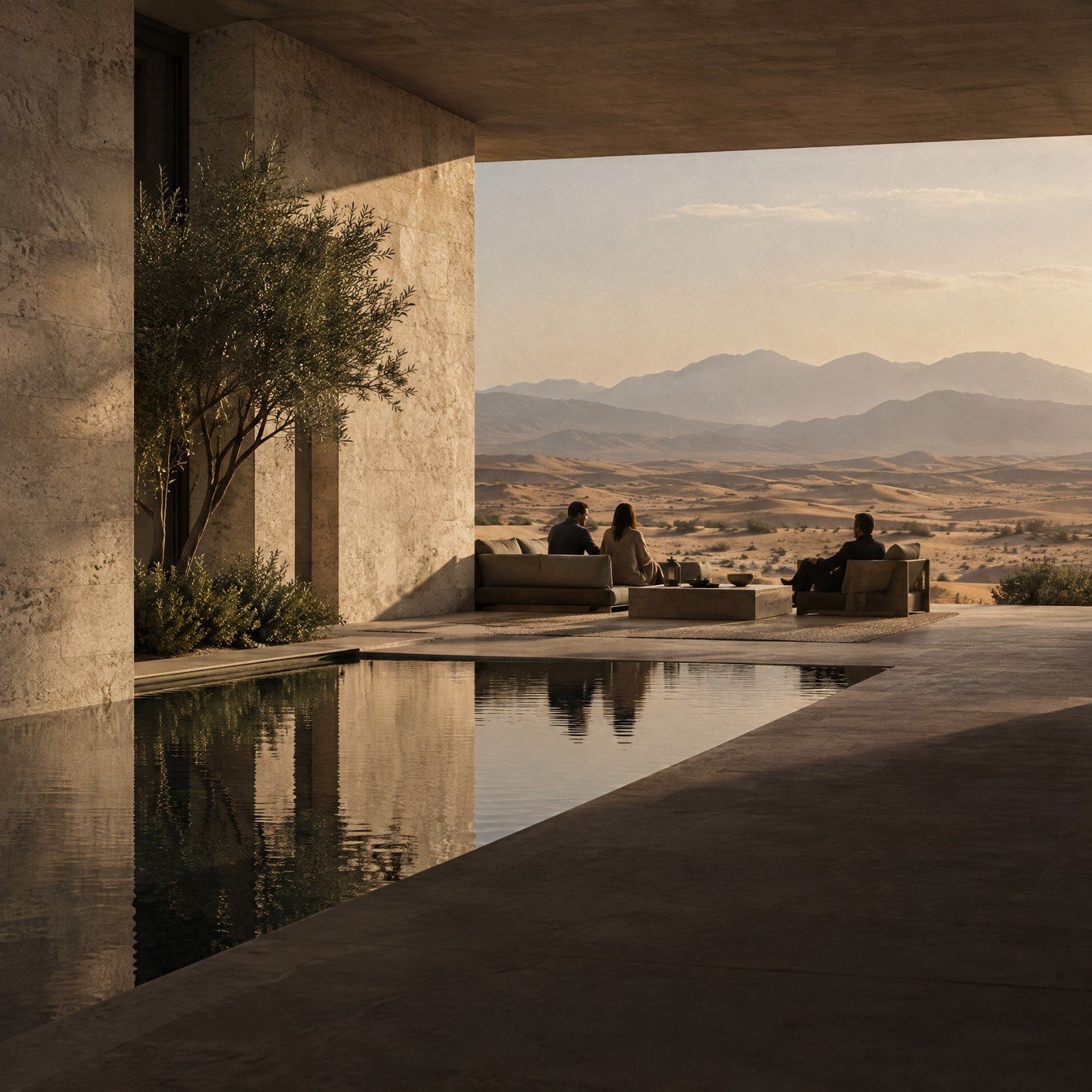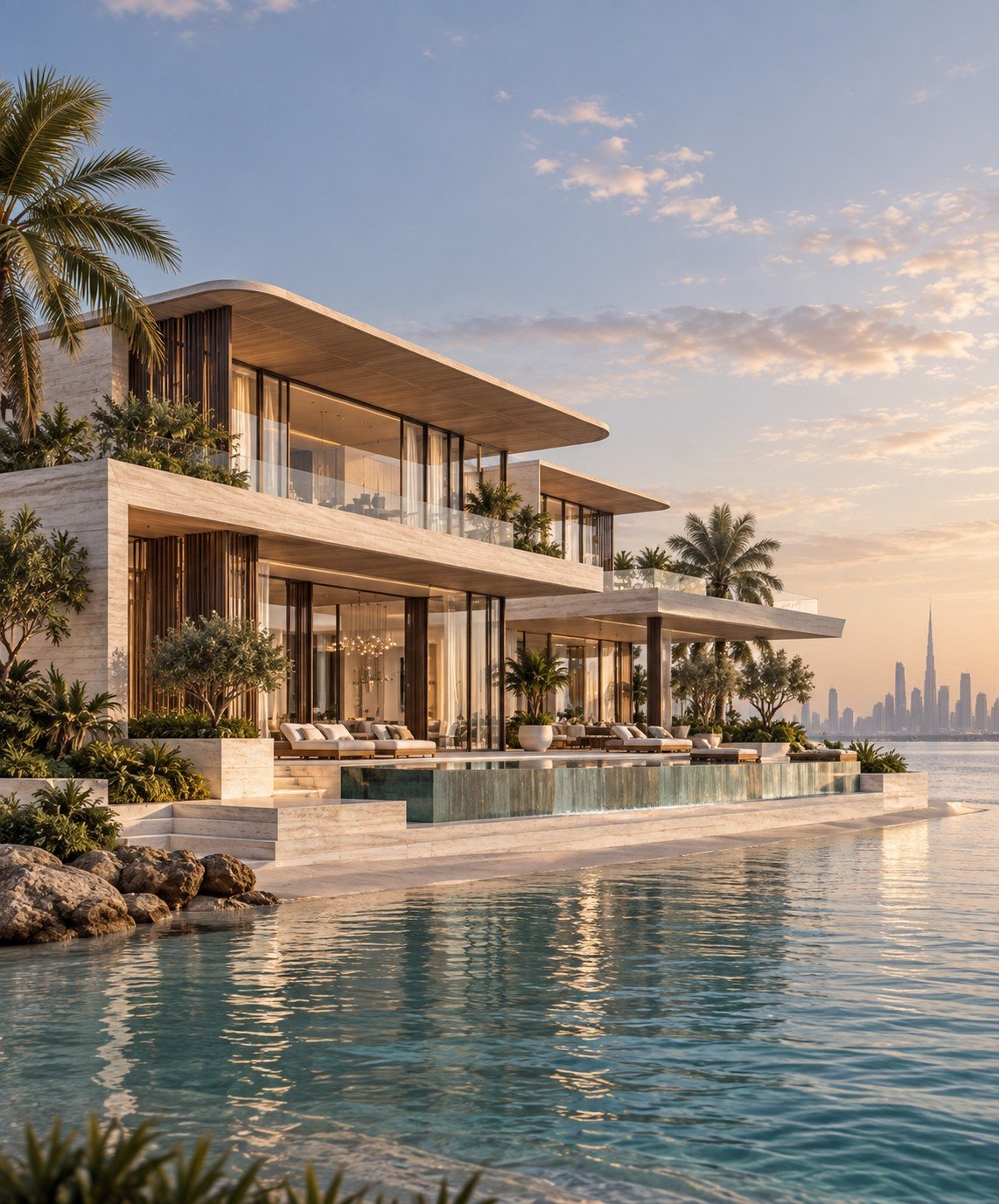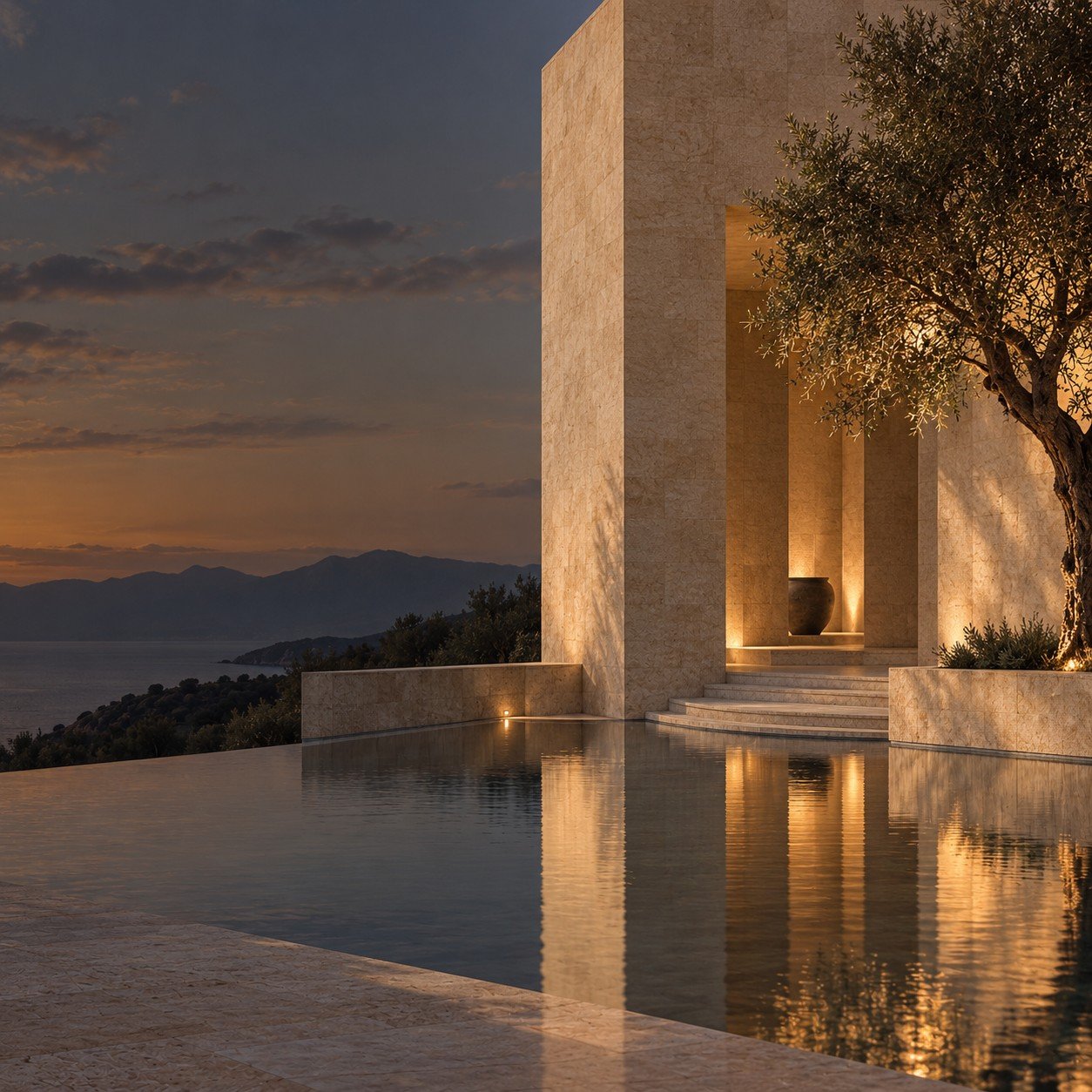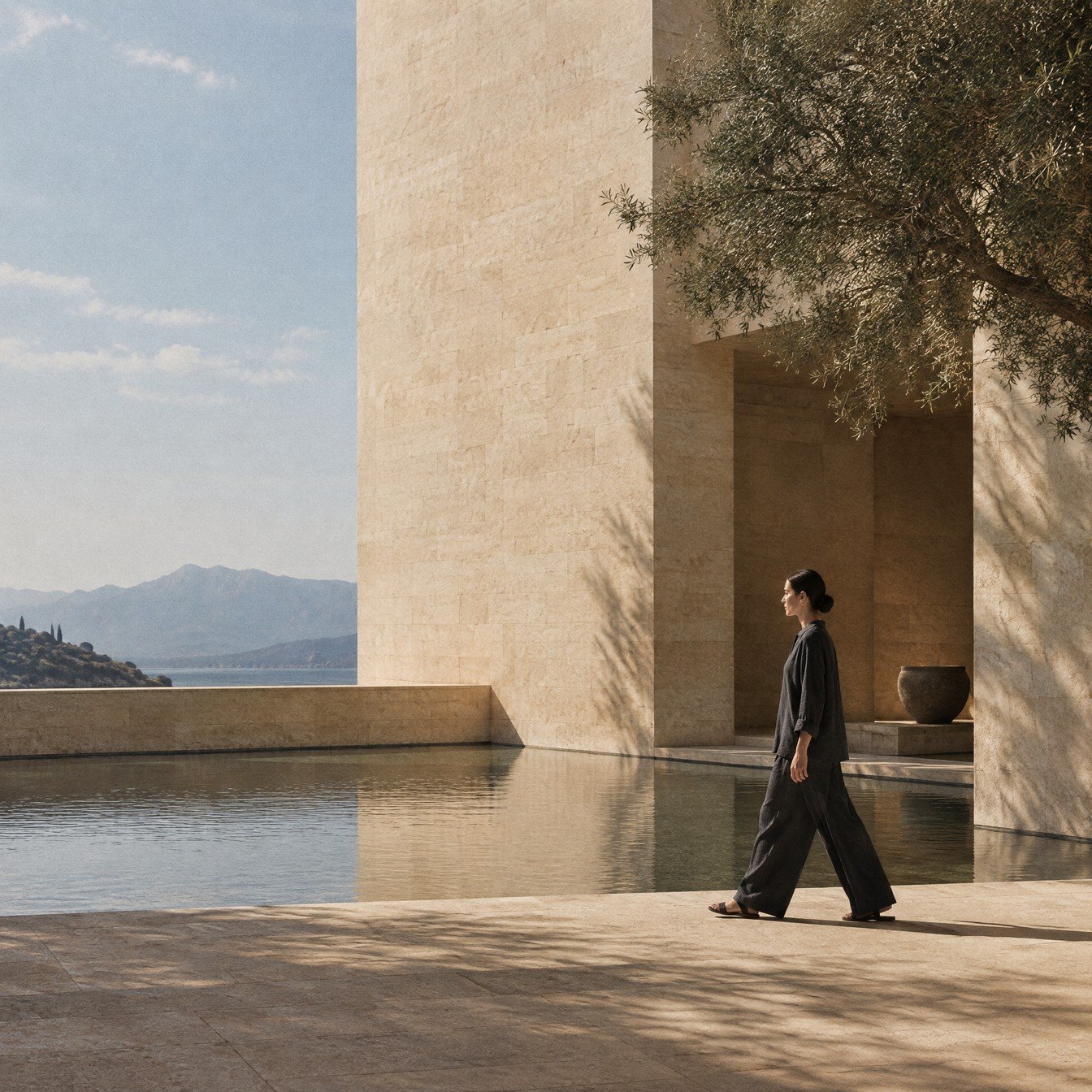
A render is a promise made in perfect light. It shows the room at its best hour, from its best corner, with furniture chosen to make it feel larger than it is. That is its job. Ours, when a client brings us one, is to ask what it leaves out.
In architecture, the most important qualities of a space are often the ones a render cannot show. Here are four to look at first.
Light across the day
A render picks one moment. Real rooms live through all of them. Ask which way the main windows face, what stands opposite, and how the light changes between nine in the morning and six in the evening in summer. In Dubai, a beautiful west-facing view can also mean a living room you cannot sit in for four months a year.
How you arrive
Few renders show the walk from the car to the lift, the lift lobby, or the corridor to the front door. Yet that sequence is what you experience every day. A generous apartment at the end of a long, narrow corridor feels very different from one that opens straight onto a private lobby.
The question is never "is it beautiful?" It is "will it still work on an ordinary Tuesday?"
Sound and services
Renders are silent. Look at what sits above, below and beside the unit: a gym, a pool deck, plant rooms, a road. Ask where the air-conditioning units go and how the kitchen is ventilated. These details shape daily comfort more than any finish.
Furniture that actually fits
Many renders are furnished with pieces slightly smaller than real ones. Measure the walls between doors and windows, and check that a full-size sofa, dining table and bed fit with room to move. If they don't, the layout will fight you for as long as you live there.
Four lenses on one plan
Design and execution is one lens. The other three ask what the location and market say, where the real value sits, and how you will actually live there. That is why we look at every project together: one conversation, four perspectives, and a clearer decision.